
Can a Dermoscopy Detect Cancer?

In this article, we’ll walk through what real patients on Reddit say about their experiences with dermoscopy, how a dermascope changes what a dermatologist can see, and what the science says about its accuracy. We’ll also look at the advantages and limitations of dermoscopy, and why — even with a dermascope — a biopsy is still the gold standard for confirming skin cancer.
What do real patients say? Insights from Reddit about the dermatoscopes
Before diving into the science, it’s helpful to see how real people living with skin cancer risk talk about dermoscopy and the dermascope itself. On Reddit communities like r/Melanoma and r/melahomies, patients often share their experiences and worries about how accurate a dermascope really is in day-to-day practice.
One user in r/Melanoma pointed out that dermatologists learn to recognize specific dermoscopic patterns when they use a dermascope:
There are certain patterns they can see with the dermatoscope that suggest something is worrying, and other patterns that are almost certainly benign.

In other words, patients understand that dermatoscopes isn’t just random “zooming in” on the skin with a dermascope—there are well-described visual patterns that help doctors separate harmless moles from suspicious ones. At the same time, no one is claiming that the dermascope is 100% foolproof.
Another commenter in r/melahomies emphasized that a dermascope is powerful, but not a replacement for a biopsy:
You usually can’t diagnose melanoma without a biopsy, but a well-trained dermatologist can spot one most of the time using a dermatoscope.
This reflects a key nuance your readers should grasp early: using a dermascope greatly improves a dermatologist’s ability to recognize potential skin cancer, but the final diagnosis still relies on pathology—looking at the tissue under a microscope.
Patients also share practical tips about preparing for a skin exam with a dermascope. In one discussion about how dermatologists use dermascopes to look for skin cancer, a user warned others:
If you have a spot that looks or feels “off” and you’re going to have it checked with a dermatoscope, don’t irritate or pick at it beforehand.
That advice sounds simple, but it matters. Scratching, picking, or “testing” a mole at home can change how it looks under the dermascope and potentially make the assessment harder.
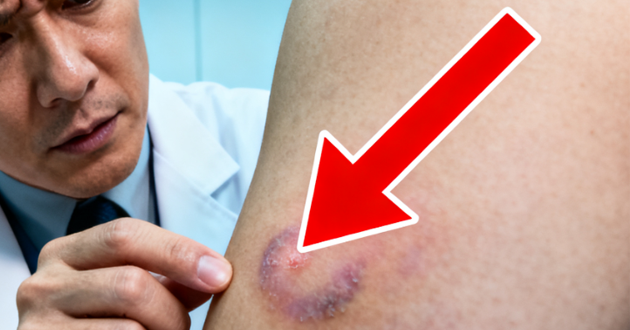
Taken together, these Reddit discussions show three important themes about dermoscopy and the dermascope:
People know a dermascope can help distinguish benign from suspicious patterns.
They also know it doesn’t replace a biopsy for a definitive answer.
Small behaviors, like not picking at a lesion before the exam, can influence how helpful the dermascope exam is.
https://www.reddit.com/r/Melanoma/comments/149h3ls/is_skin_exam_with_dermatoscope_accurate/
Can a dermatologist tell if you have skin cancer just by looking?
A question many people have is:“Can a dermatologist tell if I have skin cancer just by just looking at my skin?”
The honest answer is: not completely — even when a dermascope is used.
A visual skin exam is always the first step. Your dermatologist will usually start with the naked eye and then often switch to a dermoscopic(the handheld device used for dermoscopy) or a simple magnifier to look more closely at any concerning spots. During this exam, they’ll focus on things like:
The shape and border of a mole or spot
Its color and any color variation
Its size and symmetry
How it has changed over time
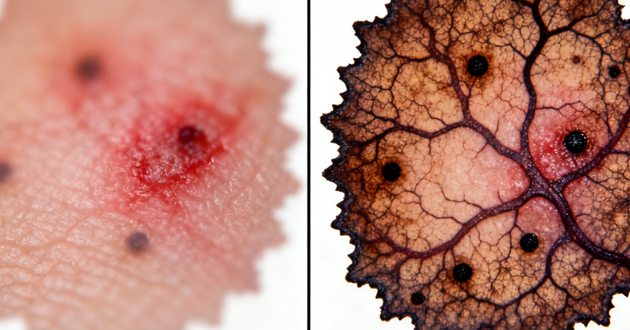
This kind of detailed visual assessment — especially when enhanced by dermoscopy with a dermascope — is very important. However, early skin cancers can still look very similar to harmless lesions, particularly to an untrained eye. Even for specialists, relying on visual inspection alone (with or without a dermoscopic) carries a higher risk of missing or misclassifying some cancers.
That’s why many dermoscopic studies compare:
|
Aspect |
Naked-eye examination only |
Naked-eye + dermoscopy (with a dermascope) |
|
Tool used |
Eyes, sometimes a simple magnifying glass |
Eyes plus a dermascope (specialized magnifying device with light) |
|
What the dermatologist can see |
Surface features: general shape, color, size |
Surface and subsurface structures, pigment patterns, vessels |
|
Ability to spot early subtle changes |
Limited, higher chance of missing early melanoma |
Better at detecting subtle or early melanoma features |
|
Overall diagnostic accuracy |
Lower accuracy for distinguishing benign vs cancer |
Higher diagnostic accuracy, especially for melanoma |
|
Typical clinical role |
Initial quick check |
Detailed assessment of suspicious spots |
|
Need for biopsy |
Still needed for confirmation |
Still needed for confirmation — dermoscopy guides biopsy decisions |
How dermoscopic helps detect skin cancer
Now let’s look at how dermoscopy works in practice. By using a dermascope to magnify and illuminate the skin, dermatologists can see structures that are invisible to the naked eye — a key reason why dermoscopy significantly improves the accuracy of detecting skin cancer, especially melanoma.
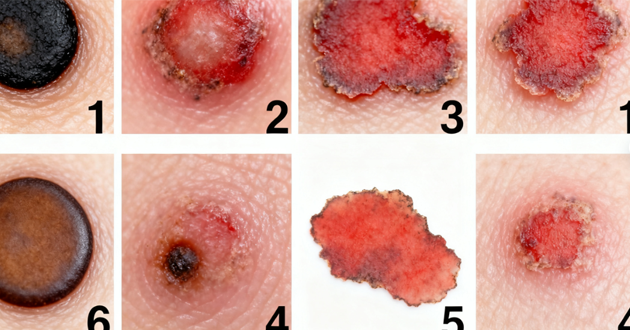
Advantages of dermatoscopes
When a dermatologist examines your skin with a dermascope, they’re not just “zooming in” — they’re using dermoscopy to see details the naked eye simply can’t pick up. The dermascope magnifies the lesion and uses polarized or specialized lighting so the doctor can assess fine pigment patterns, tiny blood vessels, and the subtle network within a mole. These structures lie just beneath the surface of the skin and are usually invisible without dermoscopy.
Compared with a standard visual exam, adding dermoscopy has been shown to improve diagnostic accuracy. In everyday terms, that translates into two key benefits:
Higher sensitivity – dermoscopy with a dermascope is better at detecting skin cancers, including early melanomas.
Higher specificity – it’s better at recognizing clearly benign lesions, which helps reduce unnecessary biopsies and anxiety.
Over the years, researchers have also described specific dermoscopic features that are strongly linked to melanoma, such as pseudopods and shiny white structures when they appear in the right pattern and context. Incorporating these dermoscopy criteria into routine skin checks helps dermatologists more confidently separate “watch and wait” spots from those that need a biopsy.
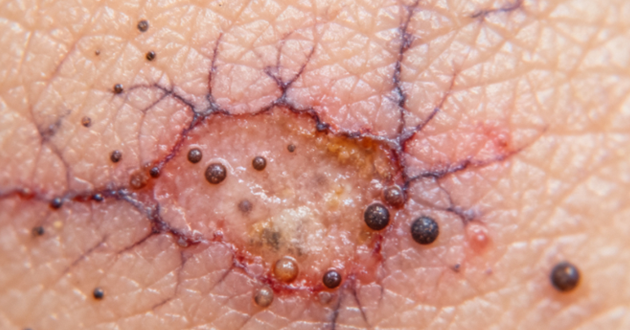
The value of dermoscopy also depends on experience. Dermatologists who are well trained in using a dermascope generally make more accurate judgments about whether a lesion is suspicious than those relying on naked-eye inspection alone.
In short, dermoscopy isn’t just a minor add-on to a skin exam. In skilled hands, a dermascope can greatly improve decision-making — helping the dermatologist choose which spots to biopsy, which to monitor over time, and which ones you can safely stop worrying about.
Limitations of dermatoscopes you should still know about
Even though dermoscopy with a dermascope is a powerful way to evaluate moles and spots, it does have important limitations. A dermascope lets a dermatologist see surface patterns and near-surface structures in much greater detail, but it still can’t show what’s happening at the cellular level. In other words, dermoscopy enhances what the eye can see — it doesn’t replace the clarity that comes from examining tissue under a microscope.
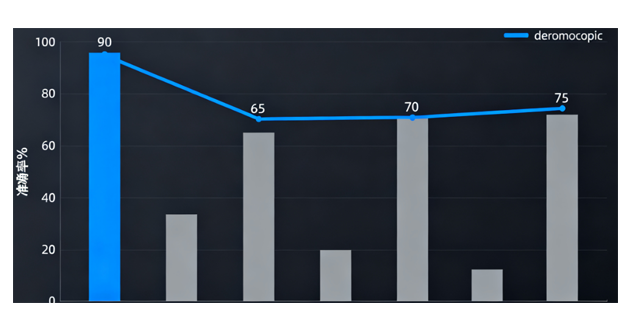
Because of this, a dermoscopy exam can still produce false alarms or miss very subtle skin cancers. Some completely harmless moles may look atypical through a dermascope, while certain early melanomas or other cancers can appear more “innocent” than they really are. How accurate a dermoscopic assessment is depends not just on the dermascope itself, but also on the experience of the dermatologist and on your individual skin: how many moles you have, how much sun damage there is, your natural skin tone, and how long a particular spot has been changing.
People who have lived through melanoma often talk about this balance in online communities. As one person put it in a Reddit discussion:
“You usually can’t diagnose melanoma without a biopsy, but a trained derm can spot one most of the time using a dermatoscope.”
That perspective sums it up well. A dermascope can strongly increase suspicion when something looks wrong, but only a skin biopsy can give a definite answer. Dermoscopy helps narrow down which lesions are most concerning; pathology provides the final confirmation.
It’s also important to remember that not all skin cancers behave the same way. Melanoma is often the focus because it can be aggressive, but other common types — such as basal cell carcinoma (BCC) and squamous cell carcinoma (SCC) — have their own dermoscopic features and risk profiles. A dermoscopy exam can help detect BCC and SCC too, but the patterns a dermatologist looks for with the dermascope are different from those used for melanoma.
Finally, change over time is a key part of dermoscopy-based skin cancer screening. A mole that has looked the same for many years is usually less worrying than one that is new, rapidly enlarging, or changing in color, border, or shape. Dermoscopy with a dermascope is most powerful when it’s used to evaluate evolving or new lesions, in the hands of a clinician who knows when to simply monitor a spot and when to say, “This needs a biopsy so we can be sure.”
https://www.djmimoreme.com/resources/blog/how-accurate-are-dermatoscopes.html
https://www.djmimoreme.com/resources/blog/how-accurate-are-skin-diagnostic-machines.html
Conclusion
Dermoscopy with a dermascope has transformed how dermatologists examine the skin. It allows them to see patterns and structures that the naked eye simply can’t, improving the ability to detect skin cancers like melanoma earlier and to distinguish benign lesions from those that might need a biopsy. In experienced hands, a dermascope is far more than a magnifying glass — it’s a powerful decision-making tool.
Table of Contents
Related information



How can we help you?
Have specific questions or requests? Fill out our inquiry form, and our dedicated team will get back to you promptly. Your inquiries are important to us, and we are committed to providing comprehensive and personalized responses tailored to your needs.


 Reach out to us today!Whether you are preparing to start your own
business in the beauty industry, are ready to upgrade your
equipment, or are just interested in our products,Contact us
today, and let’s explore how we can partner to achieve your goals
and drive your success to new heights!
Reach out to us today!Whether you are preparing to start your own
business in the beauty industry, are ready to upgrade your
equipment, or are just interested in our products,Contact us
today, and let’s explore how we can partner to achieve your goals
and drive your success to new heights!
